
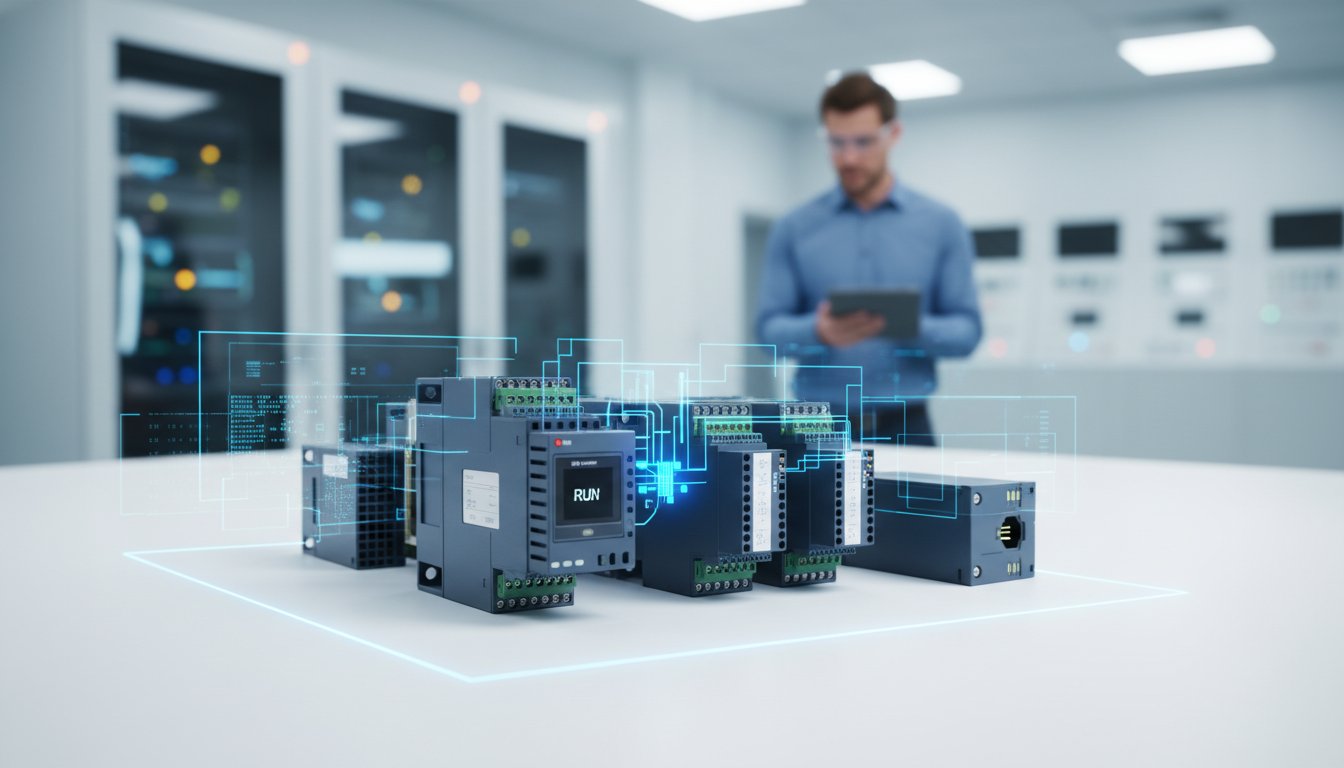
Choosing the right PLC is a critical decision. With so many plc products on the market from brands like Allen-Bradley, Siemens, and Schneider, it’s easy to feel overwhelmed. Get it wrong, and you’re facing costly project delays, compatibility nightmares, and a blown budget. It’s a high-stakes choice that demands clarity and confidence.
This guide cuts through that noise. We provide a direct, step-by-step framework to help you evaluate and select the ideal PLC for your specific industrial automation application. We’ll show you exactly which technical specs matter most, how to ensure seamless integration with your existing equipment, and how to compare major brands to find the best value. Stop wasting time and eliminate the guesswork.
Our goal is simple: to help you confidently purchase the right PLC that meets your project needs and your budget. Find a reliable, cost-effective solution right here in Australia and get your system running efficiently. Let’s get started.
Key Takeaways
- Pinpoint your exact application requirements first to avoid overspending on features you don’t need.
- Master the differences between compact and modular PLCs to match the form factor to your project’s complexity and space.
- Get a framework for comparing major brands to select the right ecosystem for your plc products, factoring in site standards and team skills.
- Look beyond the initial hardware price and calculate the total cost of ownership to make the most cost-effective purchase decision.
Step 1: Define Your Application Requirements
Before you buy, define your needs. Choosing the right Programmable Logic Controller (PLC) starts with a clear, documented plan of your machine or process. This initial assessment is the most critical step. Get it right to avoid overspending on features you don’t need or under-specifying a system that can’t handle the job. A proper plan prevents costly mistakes and future headaches.
Think about both your immediate requirements and potential future expansions. A little planning now saves significant cost and downtime later. Documenting your needs provides a clear checklist for selecting the best value hardware for your specific application.
Determine Your I/O (Input/Output) Count
Your I/O count is the foundation of your PLC system specification. It directly impacts the size, complexity, and cost of the hardware required. Create a detailed list to ensure nothing is missed.
- Inputs: Count every sensor, push button, limit switch, and any other device providing data to the PLC. List digital (on/off) and analog (e.g., 4-20mA pressure or temperature signals) inputs separately.
- Outputs: List every motor starter, solenoid valve, indicator light, and actuator the PLC will control. Again, separate digital and analog outputs.
- Spares: Always add 20-25% spare I/O to your final count. This buffer is essential for future upgrades, troubleshooting, or minor modifications without needing a major system overhaul.
- Specialty I/O: Identify any needs for high-speed counters, thermocouple inputs, RTD modules, or motion control. These require specific modules.
Assess Environmental and Physical Constraints
The factory floor is not an office. Your PLC must be rated to survive its operating environment. Ignoring these details when selecting plc products leads to premature failure and costly replacements. Check the following:
- Operating Conditions: Note the expected range for ambient temperature, humidity levels, and potential for shock or vibration. PLCs for harsh Australian mining sites need different specs than those in a climate-controlled facility.
- Physical Space: Measure the control cabinet or mounting area. Ensure there is enough physical space for the PLC, power supply, I/O modules, and wiring, plus adequate room for ventilation.
- Hazardous Areas: If the PLC will operate in an area with explosive gases or combustible dust, it requires specific certifications (e.g., IECEx). This is a non-negotiable safety and compliance requirement.
Step 2: Select the Right PLC Type and Form Factor
Choosing the right controller starts with understanding the form factor. The range of available plc products can be categorised into different types, and your decision between compact and modular systems directly impacts initial cost, scalability, and future-proofing. The key drivers for your choice are the complexity of your application, your budget, and the physical space available in your control panel.
Compact or ‘Brick’ PLCs
These are efficient, all-in-one units. The processor (CPU), power supply, and a fixed number of inputs/outputs (I/O) are integrated into a single, compact housing. They are extremely cost-effective for small-scale automation or replacing a handful of smart relays.
- Best for: Simple, standalone machine control.
- Advantage: Lower upfront cost (A$) and simple installation.
- Limitation: Expansion is minimal or non-existent.
Popular series like the Siemens LOGO! or Allen-Bradley Micro800 are prime examples, offering great value for fixed applications.
Modular PLCs
Modular PLCs offer superior flexibility and are built for growth. The system is assembled from individual components mounted on a common rack or DIN rail: a base rack, a power supply, a CPU, and separate I/O modules (digital, analogue, etc.). This design allows you to build a completely custom controller tailored to your exact needs. If your process expands, simply add more I/O modules. This scalability makes them the standard for medium to large automation systems. Maintenance is also simplified, as a faulty module can be swapped out quickly without affecting the rest of the system.
Rack-Mounted PLCs
A larger, more powerful type of modular PLC, rack-mounted systems are designed for high-I/O count and demanding applications. They use a robust backplane that can accommodate a large number of modules, supporting thousands of I/O points. These high-performance plc products are the backbone of large-scale plant control, complex manufacturing lines, and critical infrastructure projects across Australia. They provide the highest processing speeds, extensive communication capabilities, and options for redundancy to ensure maximum system uptime and reliability.

Step 3: Compare Key Technical Specifications
Once you know your application’s requirements, it’s time to check the datasheets. Focus on the specifications that directly impact your machine’s performance and your budget. The goal is to get the job done efficiently without paying for features you will never use. Compare models from major brands like Siemens, Schneider Electric, and Allen-Bradley to find the best value.
When you evaluate different plc products, look past the brand name and focus on the core numbers that matter for your project. A lower-cost PLC from a reputable brand might offer the exact performance you need, saving you significant money.
Processing Speed and Memory
CPU speed dictates how fast the PLC scans and executes your logic. For high-speed applications like packaging lines or multi-axis motion control, a fast processor is non-negotiable. For slower processes, a standard CPU is more than enough. Memory size limits your program’s complexity. Ensure you have enough for your code, data tables, and any future expansions. Don’t overspend on a high-spec model if a basic unit will do the job.
Communication Protocols and Networking
Your PLC must communicate with other devices. Identify what it needs to connect to:
- Human-Machine Interfaces (HMIs)
- Variable Speed Drives (VSDs)
- Other PLCs or SCADA systems
Check for built-in support for common protocols like EtherNet/IP, PROFINET, or Modbus TCP/IP. The number and type of ports (e.g., Ethernet, RS-485) are critical. Choosing a PLC with the right native communications avoids the extra cost and complexity of gateways or expansion modules.
Programming Software and Language
Consider your team’s existing skills. Most technicians are familiar with Ladder Logic (LD), making it the safest choice for many workshops. However, some plc products also support Function Block Diagram (FBD) or Structured Text (ST), which can be better for certain tasks. Finally, evaluate the software cost. Some development environments are free, while others require expensive annual licenses that can cost thousands of AUD. Always factor software licensing into your total cost calculation.
Step 4: Evaluate Major PLC Brands and Ecosystems
Choosing the right PLC brand is a practical decision, often dictated by existing site standards, team familiarity, or specific application needs. While relay logic is brand-agnostic, PLCs lock you into a specific ecosystem of hardware, software, and support. The leading manufacturers all offer robust, reliable hardware, but their strengths vary. InstroDirect supplies genuine plc products from all major brands at the best prices, ensuring you get the right hardware for your job without paying manufacturer RRP.
Providers with Robust Integrated Systems
Certain manufacturers are dominant forces in specific regional markets, known for their rugged construction and powerful performance. Their PLCs are often a standard in heavy industrial sites requiring tightly integrated systems.
- Key Platforms: Typically offer high-end controllers for large, complex applications and compact versions for mid-range control.
- Strengths: Excellent for applications involving motion control, drives, and safety, providing seamless integration across these functionalities.
- Software: Programmed using comprehensive, powerful engineering environments designed for complex automation tasks.
Global Leaders with Broad Portfolios
Some global leaders have an exceptionally broad portfolio, scaling from simple logic controllers to advanced industrial PCs for complex process automation. These providers have a massive footprint across continents.
- Key Platforms: Offer diverse series, including powerful controllers for advanced applications, mid-range options, and micro-PLCs for basic tasks.
- Strengths: Ideal for manufacturing, infrastructure, and process control. Often feature a unified engineering environment that integrates PLCs, HMIs, and drives.
Specialists in Machine and Energy Management
Another category includes major players with strong offerings in machine control, building automation, and energy management. Their PLC series are respected for reliability and innovation.
- Key Platforms: Provide high-performance controllers for process and demanding applications, alongside scalable options for smaller systems.
- Strengths: Their platforms often integrate control with broader software and analytics capabilities. They frequently provide strong value for small to medium-sized machine control systems.
Making Your Selection
Your final choice depends on your long-term goals. Assess which brand’s ecosystem, from programming software to hardware scalability, best fits your operations. Also, consider the local availability of support and spare parts to minimise downtime. When sourcing genuine plc products, getting the best price is critical to your budget. For amazing deals on all major brands, browse our online shop or contact us directly if you can’t find the part you need.
Step 5: Finalising Your Purchase Decision
Once you’ve decided a PLC is the right path, the final steps involve a hard look at budget, supplier reliability, and long-term support. The cheapest upfront price is not always the best value. Making the right commercial decision ensures your project’s success now and into the future.
Budget and Total Cost of Ownership (TCO)
Look beyond the initial hardware price to the Total Cost of Ownership (TCO). This holistic view prevents unexpected expenses from derailing your budget. Your true investment in a control system includes several key factors:
- Hardware and Software Costs: This covers the PLC controller, I/O modules, power supplies, and HMI panels. Don’t forget to factor in software licensing fees, which can be per-seat or ongoing subscriptions.
- Training and Labour: The cost to train your team on programming and maintenance. A complex system can lead to higher initial labour costs and require specialised skills.
- Spares and Maintenance: Factor in the cost of holding critical spare parts. A system’s longevity also depends on the long-term availability and price of replacement components.
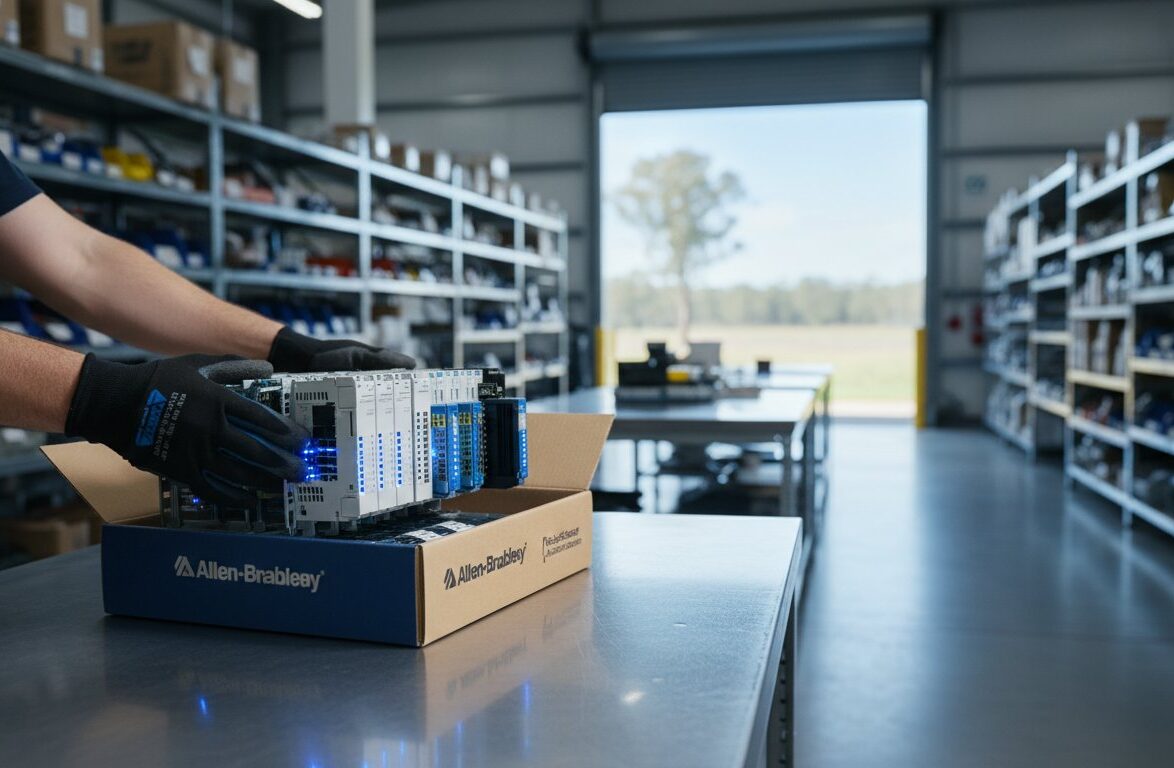
One of the most effective ways to manage your initial outlay is through parallel importing. By sourcing genuine new and surplus plc products from global markets, InstroDirect offers major brands like Allen-Bradley and Siemens at prices significantly lower than the local manufacturer’s RRP, giving you a powerful competitive advantage.
Supplier Support and Availability
Your supplier choice is critical. A good partner provides more than just a part number in a box; they provide confidence and reduce project risk. Choosing the wrong component can lead to costly redesigns and delays. Can your supplier offer expert advice to validate your selection before you commit?
Project timelines are tight. Waiting weeks for a critical part is not an option. Check for local stock availability and realistic delivery times to avoid expensive downtime. At InstroDirect, we provide expert phone support for all the plc products we sell, ensuring you get the right part the first time. Our extensive local stock means you get what you need, fast.
Ready to finalise your purchase? View our full range of PLC products for competitive pricing and fast delivery across Australia.
Find the Right PLC Products at the Best Price
Choosing the right PLC comes down to a clear process. By defining your exact application needs and carefully comparing technical specifications, you can select a controller that delivers the performance your operation demands without overspending. This methodical approach ensures you invest in a solution that is both effective and economical for your Australian business.
At InstroDirect, we make the final step easy. We stock a massive range of genuine plc products from leading brands like Rockwell, Siemens, and Schneider Electric. Why pay full price? SAVE OVER 40% from manufacturer RRP. All our products are backed by expert Australian support, ready by the phone to help you find the exact part for your system.
Can’t find the PLC you need? Call us for direct expert help.
Get your project moving with the right parts at the right price today.
Frequently Asked Questions
What is the difference between a PLC and a PAC (Programmable Automation Controller)?
Think of a PAC as a more powerful PLC. A standard PLC excels at high-speed, discrete logic for machine control. A PAC does that and more, handling complex process control, advanced motion, and large-scale data management in a single platform. For example, an Allen-Bradley ControlLogix is a PAC, built for bigger, more demanding applications than a standard PLC.
Can I mix and match I/O modules from different PLC brands?
No. I/O modules are proprietary. A Siemens I/O card will not work on an Allen-Bradley backplane. Each manufacturer uses a specific communication protocol and physical connection for their system. You must use I/O modules designed for your specific PLC series. Using the wrong module will not work and could potentially damage your equipment.
How important is the programming software when choosing a PLC?
It is a critical cost and usability factor. The software, like Rockwell’s Studio 5000 or Siemens’ TIA Portal, is how you program, monitor, and troubleshoot your system. The initial cost and ongoing annual license fees in Australia can be substantial, often exceeding the hardware price over the PLC’s life. Always factor software costs into your budget when selecting new plc products.
What is the typical operational lifespan of an industrial PLC?
Industrial PLCs are built to last. A typical lifespan is 15-20 years, and many run for even longer in clean environments. The CPU itself is extremely reliable. Failures are more common in components like power supplies or I/O modules, which are exposed to field-level electrical issues. We can help source replacement parts to keep your older systems running efficiently.
Do I need a special Safety PLC for my application?
Yes, if your machine has functions that protect people from harm. For applications like emergency stops, light curtains, or safety gates, Australian standards (AS/NZS 4024) require certified safety components. A Safety PLC has redundant architecture to ensure it fails in a predictable, safe state. A standard PLC is not rated for these critical safety functions.
Is it difficult to upgrade from an older PLC model to a new one?
Upgrades require careful planning to minimise downtime. The process involves more than just swapping hardware. You must convert the existing program, which is rarely a direct copy-paste task. It often requires significant I/O re-wiring and system re-commissioning. Sourcing all the correct new plc products ahead of time is key to a smooth and cost-effective transition.
Leave a Comment
Your email address will not be published. Required fields are marked *