
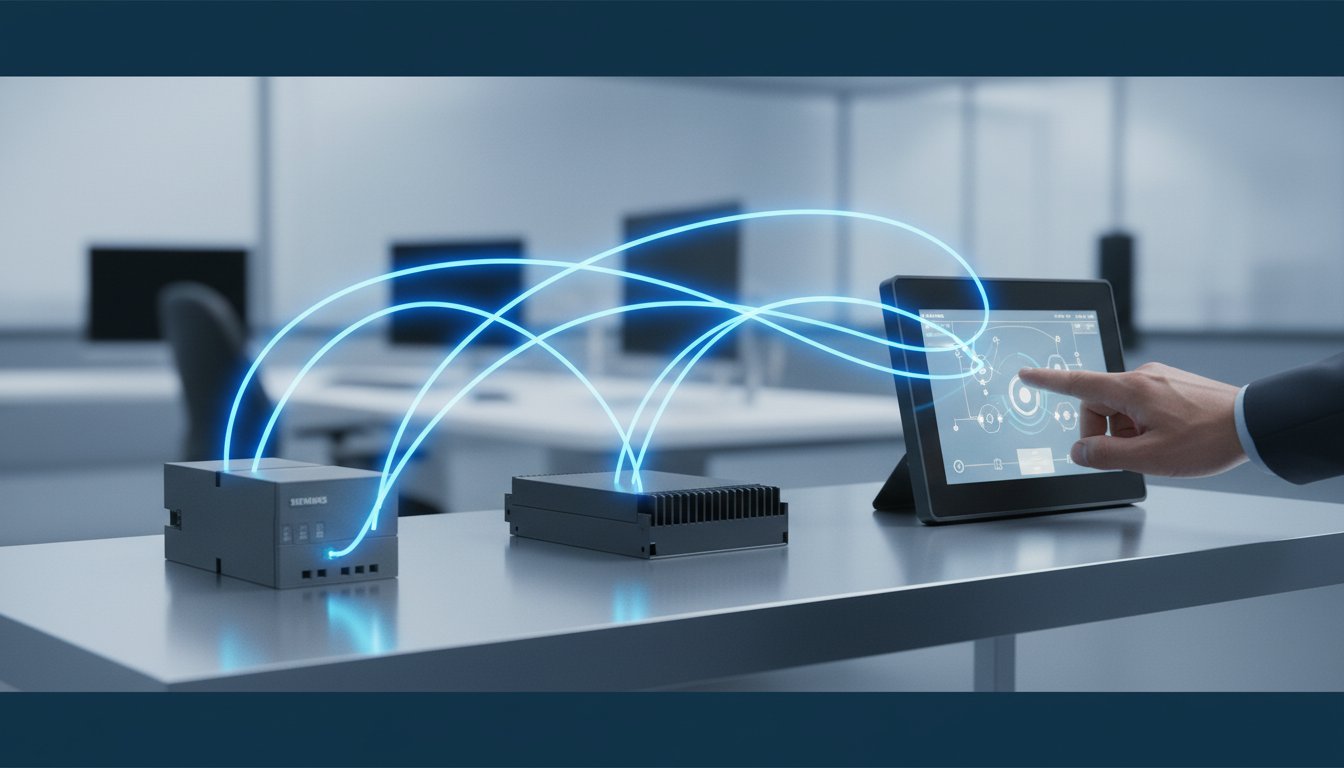
Tired of marketing jargon and high quotes for Siemens systems? You see the term totally integrated automation but struggle to understand what it means for your plant floor beyond the sales pitch. For many Australian engineers, the idea brings up concerns about expensive vendor lock-in and the headache of integrating complex new components with your existing setup. You need straight answers, not more buzzwords. This guide delivers just that.
Forget the official brochures. Here, we break down what Totally Integrated Automation (TIA) really is in practical terms. You’ll learn the specific hardware-from SIMATIC PLCs to HMI panels-that forms a TIA system. We’ll show you the tangible benefits that save you time and money, like drastically faster commissioning and simplified maintenance. Most importantly, discover how to source and implement TIA components smartly, without paying full manufacturer RRP. Get the technical details you need to build a better, more efficient system for less.
Key Takeaways
- Understand TIA’s core principle: a single engineering environment to program everything from your PLC to your HMI, cutting down on software juggling.
- Learn how TIA hardware components are built for seamless communication, significantly reducing integration headaches and commissioning time.
- Discover the real-world cost savings of totally integrated automation, from faster troubleshooting to reduced training time for your team.
- Get a practical strategy for implementing TIA in Australia, starting with a single machine to control costs and prove the concept.
What is Totally Integrated Automation? Beyond the Buzzword
In industrial automation, time is money. Siemens Totally Integrated Automation (TIA) is not just a marketing term-it’s a practical engineering framework designed to simplify your entire automation process and reduce project costs. At its core, TIA is a unified system where all automation components work together seamlessly.
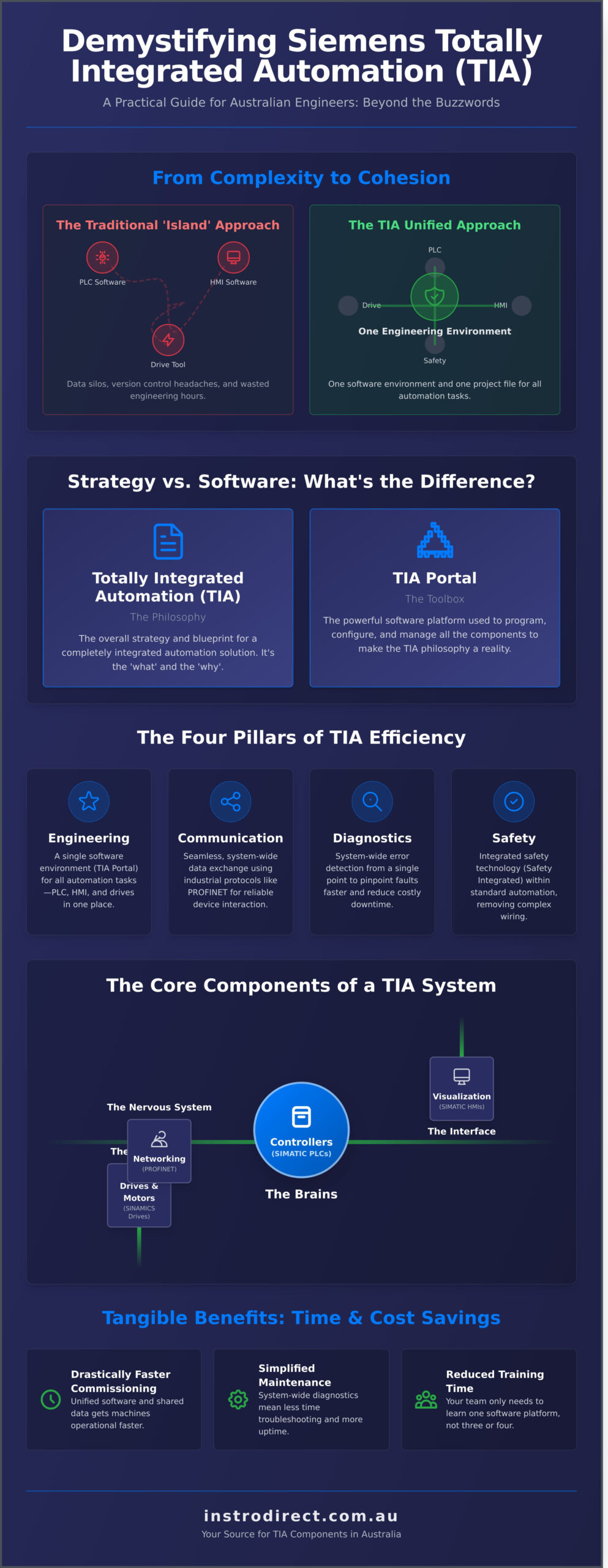
Forget the old ‘island’ approach. Traditionally, you needed separate software for PLCs, different software for HMIs, and yet another tool for your drives. This created data silos, version control headaches, and wasted engineering hours. The main goal of TIA is to eliminate this complexity. The philosophy is simple: one software environment and one project file for all automation tasks. This integrated approach has been evolving for decades; you can read the history of Totally Integrated Automation to see how Siemens first introduced the concept to solve the exact problem of disconnected systems and deliver efficiency gains.
The Four Pillars of TIA
The TIA framework is built on four key principles that deliver direct benefits in efficiency and cost savings:
- Engineering: A single, intuitive software environment (TIA Portal) for all automation tasks. Program your PLC, design HMI screens, and configure drives in one place.
- Communication: Seamless, system-wide data exchange using industrial protocols like PROFINET. Devices talk to each other without complex gateways or configuration.
- Diagnostics: System-wide error detection from a single point. Pinpoint faults faster, from the HMI down to an individual drive, reducing costly downtime.
- Safety: Integrated safety technology (Safety Integrated) within the standard automation. No need for separate hardware or complex wiring for safety functions.
TIA vs. TIA Portal: What’s the Difference?
It’s important to know the distinction. The terms are often used together, but they are not the same thing. The difference is straightforward:
- Totally Integrated Automation (TIA) is the overall strategy and philosophy from Siemens. It’s the concept of a completely integrated automation solution.
- TIA Portal is the actual software platform-the engineering tool you use to program PLCs, configure HMIs, and manage drives to make the TIA philosophy a reality.
Here’s a simple analogy: TIA is the complete architectural blueprint for your factory floor. TIA Portal is the powerful toolbox you use to build, commission, and maintain it.
The Core Components of a TIA System: From PLC to Drive
The power of totally integrated automation isn’t just a software concept; it’s realised through hardware built to communicate flawlessly. For engineers, this is where theory becomes practice and real savings are made. A well-designed TIA system relies on core components that function as a single unit, not isolated devices. Understanding the architecture of an integrated automation system shows how each part-from the controller to the drive-plays a critical role. Using these parts together is the key to unlocking maximum efficiency and reducing project costs.
Controllers: The Brains (SIMATIC PLCs)
At the heart of any TIA system is a SIMATIC PLC. These controllers act as the central processing unit for all automation tasks. Key families include the S7-1200 for compact, scalable solutions and the high-performance S7-1500 for complex machine control. Critically, both are programmed exclusively within the TIA Portal, ensuring a single, unified development environment from the start.
Visualization: The Interface (SIMATIC HMIs)
SIMATIC HMI panels, like the Basic and Comfort series, provide the window into your process. Their true value in a TIA system is the shared tag database with the PLC. Define a variable once in your S7-1500 project, and it’s instantly available to use on the HMI. This simple feature eliminates hours of duplicate data entry and drastically reduces the risk of human error during development.
Drives & Motors: The Muscle (SINAMICS Drives)
SINAMICS variable speed drives provide the physical movement. Within the TIA Portal, these drives are not treated as third-party devices; they are configured in the same project as the PLC and HMI. Pre-built motion control technology objects simplify complex tasks like positioning and synchronisation. This unified approach is a massive time-saver during machine commissioning, getting you operational faster.
Networking: The Nervous System (PROFINET)
PROFINET is the industrial Ethernet standard that ties the entire totally integrated automation ecosystem together. It acts as the high-speed nervous system, enabling rapid and reliable data transfer between controllers, HMIs, drives, and distributed I/O. This seamless communication is essential for real-time control and diagnostics. See our full range of Siemens automation components to build your system.
Real-World Benefits: How TIA Saves Engineers Time & Money
Technical features are one thing, but the real value of Siemens TIA is measured in Australian dollars saved and hours reclaimed. For plant managers and engineers on the ground, the platform’s unified structure translates directly into a leaner, more profitable operation. This isn’t just an upgrade; it’s a fundamental shift in how you execute projects, justifying the investment by tackling the biggest costs: engineering time and production downtime.
Drastically Reduced Engineering Time
The old way of programming meant juggling separate software for your PLC, HMI, and drives. TIA eliminates this. With one platform, you reduce training costs and get your team productive faster. The biggest gains come from:
- Single Software Environment: Instead of learning three different tools, your team masters one. This unified approach within the Totally Integrated Automation (TIA) environment is a game-changer, standardising how all components communicate.
- Drag-and-Drop Configuration: Save hours of manual setup. Simply drag hardware components like I/O modules or VSDs into your project, and TIA Portal handles the complex addressing and configuration behind the scenes.
- Reusable Libraries: Stop writing the same motor control logic for every project. Create standardised, pre-tested code blocks and deploy them instantly, slashing development time.
Faster Commissioning and Troubleshooting
Getting a machine online and keeping it running is where TIA delivers massive value. The integrated nature of the system means you can diagnose and resolve issues faster than ever before, minimising costly downtime.
The built-in simulation tools allow you to test your PLC and HMI code in a virtual environment before deploying it to the live machine. This catches errors early, preventing potential equipment damage and reducing on-site commissioning from days to hours. When a fault does occur, integrated system diagnostics let you pinpoint the problem-whether it’s in the drive, a sensor, or the PLC-from a single screen.
Increased Scalability and Future-Proofing
Your automation system shouldn’t lock you into today’s technology. A key benefit of a totally integrated automation platform is its ability to grow with your facility. Adding a new drive, a safety controller, or an entire production line is straightforward because they all integrate into the same project file.
This protects your initial investment. As technology evolves, TIA is designed to incorporate advancements like cloud connectivity and edge computing, ensuring your system remains modern and efficient for years to come. Ready to build a more efficient system? Find the Siemens TIA components you need at the best prices at instrodirect.com.au.
How to Start with TIA: Sourcing Components in Australia
A full-scale migration to a Siemens Totally Integrated Automation platform is a major project. The cost and complexity can be daunting. The smart approach? Start small. Prove the concept and the ROI on a single machine or production cell first before committing to a plant-wide overhaul.
Identifying a Pilot Project
Focus on upgrades with a clear and fast return on investment. This builds momentum for a wider rollout and demonstrates the value of integration. Good starting points include:
- Replacing an Obsolete PLC: Swap out an older, unsupported PLC with a modern Siemens S7-1200 or S7-1500. This immediately improves reliability, programming efficiency, and data access.
- Integrating a Standalone Machine: Upgrade a single machine with a new HMI and drive, connecting them through the TIA Portal to create a small-scale, fully integrated solution.
Finding the Right Siemens Parts for the Job
Identifying the correct PLC, HMI, or SINAMICS drive is critical. Match the component’s specifications-processing power, I/O count, and communication protocols-directly to your application’s needs to avoid overspending. Get the part number right, and you get the performance you need at the best price.
Can’t find a specific part number or need advice? Browse our online shop or call us for help. We source the components you need.
The Advantage of a Direct Importer
Getting started with totally integrated automation doesn’t have to break the budget. As a direct parallel importer, InstroDirect sources genuine Siemens components from a global network. We bypass the high markups of official Australian distribution channels, passing the significant cost savings directly to you.
We hold a wide range of genuine Siemens stock right here in Australia, ready for fast dispatch. You get the parts you need, faster and for less. Our expert team is here to help you verify part numbers and ensure you get the right component for your project. Get the best prices on genuine Siemens TIA hardware at instrodirect.com.au.
Your Path to Totally Integrated Automation Starts Here
As we’ve covered, the concept of totally integrated automation is far more than an industry buzzword. It represents a fundamental shift in engineering efficiency, creating a single, cohesive environment where all your automation components-from the central PLC and HMI to the individual drives and sensors-communicate flawlessly. This unification is the key to unlocking significant savings, drastically reducing programming time, simplifying commissioning, and lowering long-term operational costs for your Australian-based projects.
The next step is sourcing the right hardware without overpaying. At InstroDirect, we make building your TIA system affordable and straightforward. Find the Siemens components for your TIA project at the best prices. We specialise in parallel importing, giving you access to genuine Siemens parts at direct import prices that save you money. With extensive stock available here in Australia and expert support ready to help you find the exact part you need, your project won’t be held up by long lead times or sourcing issues.
Start saving and streamlining your automation projects today.
Frequently Asked Questions
Is Totally Integrated Automation only suitable for large factories?
No. TIA is fully scalable. It works for single-machine control just as well as for entire plant-wide systems. You can start small with a cost-effective Siemens S7-1200 PLC and a Basic HMI panel. This approach allows you to leverage the power of integrated engineering for smaller projects, providing a clear upgrade path as your needs expand. TIA delivers efficiency at any scale, making it a smart choice for Australian businesses of all sizes.
Do I have to use 100% Siemens products to benefit from TIA?
No, you do not need 100% Siemens hardware. While a full Siemens system offers the tightest integration, TIA is built on open standards. Using communication protocols like PROFINET and OPC UA, you can connect devices and components from many other manufacturers. This flexibility allows you to integrate existing third-party equipment into a Siemens control system, protecting your initial investment while still gaining significant engineering benefits.
What is the main difference between TIA Portal and older Siemens software like STEP 7?
The key difference is integration. TIA Portal provides one single engineering framework for your entire automation project-PLCs, HMIs, drives, and safety are all configured in one software package. Older software like STEP 7 Classic required separate programs (like WinCC for HMIs) for different components. This unified approach in TIA Portal drastically reduces engineering time, minimises errors, and simplifies project data management across all devices.
Can I integrate my existing PLCs from other manufacturers with a TIA system?
Yes, integration is possible. While you cannot program PLCs from other manufacturers directly inside the TIA Portal, you can connect them to a Siemens system. This is typically done using communication gateways or standard industrial protocols like OPC UA or Modbus TCP/IP. This allows for data exchange between systems, helping you achieve a level of totally integrated automation even with a mix of hardware from different vendors.
How can I get started with TIA on a limited budget?
To start on a limited budget in Australia, look for Siemens S7-1200 Starter Kits. These kits are a great value, bundling a CPU, input/output simulators, and often a TIA Portal Basic software license at a significantly reduced price. This is the most cost-effective way to get hands-on experience and develop small-scale applications. Contact us to find the best deal on a starter kit for your specific needs.
Is the TIA Portal software free to use?
No, the full commercial versions of TIA Portal are licensed software and require purchase. However, Siemens offers lower-cost options like TIA Portal Basic, which is designed for programming the S7-1200 PLC series and Basic Panels. For learning or evaluation, Siemens may also provide free 21-day trial licenses for the professional versions. For any ongoing commercial work, a paid license is necessary to ensure support and full functionality.
Leave a Comment
Your email address will not be published. Required fields are marked *