
Top Benefits of Using a VFD on a Motor: Drive Efficiency & ROI in 2026
Your fixed-speed motors are costing you thousands of A$ in wasted energy every year. It’s a direct hit to your bottom line, and with Australian electricity prices projected to climb another 5-10% by 2026, that cost is only getting worse.
It’s a frustrating cycle. You’re battling sky-high power bills, premature mechanical wear, and the constant headache of sourcing parts from authorised dealers charging a premium. You know there has to be a more efficient, cost-effective way to operate. This guide cuts straight to the solution. We’ll show you the real-world benefits of using a VFD on a motor, detailing exactly how this single upgrade can slash your energy consumption by up to 50%, extend the life of your critical hardware, and give you precise control over your production line.
We’ll break down the top advantages, from massive energy savings and reduced maintenance costs to improved process automation, all backed by hard numbers relevant to Australian industry. No fluff, just direct savings and a clear path to a better ROI.
Key Takeaways
- Understand how VFDs cut your energy bills by matching motor speed to the actual load, eliminating wasted power from fixed-speed operation.
- See how controlled acceleration and deceleration reduces mechanical stress, prevents issues like water hammer, and extends the lifespan of your motors and equipment.
- Explore the key benefits of using a vfd on a motor for production, including achieving sub-RPM accuracy for precise process control and leveraging advanced safety features.
- Compare top VFD brands for the Australian market and discover how parallel importing can save you over 40% off local RRP, significantly lowering your initial investment.
Why Fixed-Speed Motors Are Draining Your Operational Budget
Your fixed-speed motors are costing you more than you think. Every time a standard motor starts or runs inefficiently, it hits your budget with high energy bills, peak demand charges, and expensive mechanical repairs. This isn’t just a minor expense; it’s a constant drain on your profitability. Understanding the hidden costs of outdated motor control is the first step to seeing the real benefits of using a VFD on a motor.
Stop accepting these costs as standard. There is a better, more efficient way to operate.
The Problem with Direct-On-Line (DOL) Starting
A direct-on-line start slams your motor with a massive inrush current, typically 600-700% of its normal running amperage. This electrical shockwave stresses your entire power infrastructure. For Australian businesses, this directly impacts your utility bill through demand charges, where your highest 15-minute power peak can set your electricity rates for the entire month. One hard start at the wrong time can cost you thousands of A$. Constant DOL starts also cause premature equipment failure, targeting weak points like motor windings, couplings, and gearboxes.
Inefficiency of Mechanical Flow Control
Controlling flow with a valve or damper while the motor runs at 100% speed is like driving a car with the accelerator floored and using the brake to control your speed. It’s pure waste. All that restricted energy is converted into useless heat, friction, and vibration, accelerating wear on valves, pipes, and pump seals. The Affinity Laws for centrifugal loads state that motor power consumption is proportional to the cube of its speed, meaning a small reduction in speed creates a massive drop in energy use. Throttling throws this powerful saving principle away.
Instead of burning energy against a mechanical brake, a Variable-frequency drive (VFD) matches the motor’s speed directly to the load demand. This eliminates the energy waste and mechanical stress inherent in fixed-speed systems. The immediate reduction in power consumption is one of the most significant benefits of using a VFD on a motor, directly cutting your operational expenses from day one.
The hidden costs don’t stop at energy. The mechanical shock from a DOL start sends a physical jolt through your entire system. This high-torque startup causes:
- Stretched belts and chains: Requiring frequent tensioning and replacement.
- Gearbox damage: Leading to chipped teeth and premature wear.
- Shaft fatigue: Increasing the risk of catastrophic failure and unplanned downtime.
- Product spillage or damage: On conveyor systems due to violent jerking starts.
These repair costs and production losses add up quickly. Furthermore, with Australia’s Greenhouse and Energy Minimum Standards (GEMS) pushing for higher efficiency motors (IE3 and above) by 2026, running them in an inefficient fixed-speed configuration will become a compliance issue. Integrating VFDs is no longer just an option for savings; it’s a necessity for future-proofing your plant.
Maximizing Energy Efficiency and Reducing Utility Costs
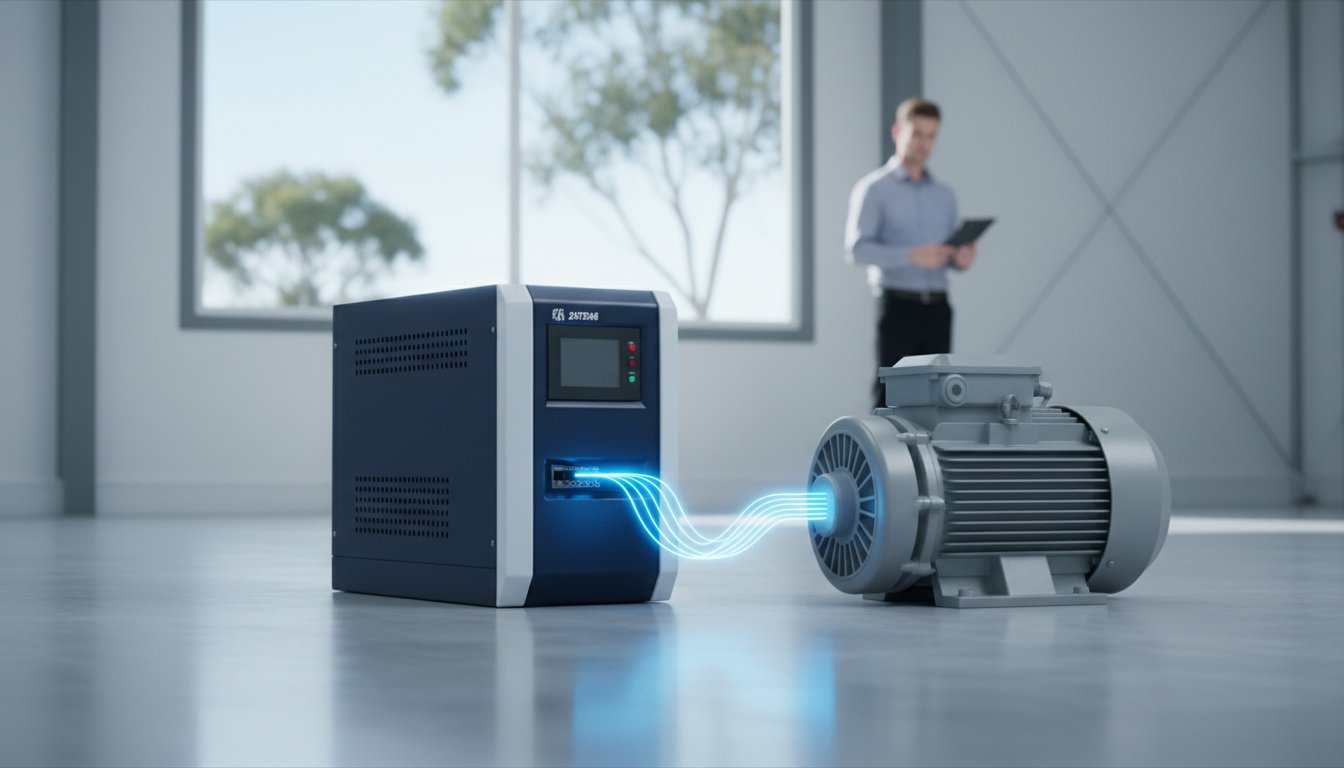
The single biggest financial argument for a Variable Frequency Drive (VFD) is its direct impact on your power bill. A standard motor connected directly to the power line runs at a fixed speed, consuming nearly full power regardless of the actual work it’s doing. A VFD changes this. It precisely controls the motor’s speed to match the real-time load demand. You don’t run a pump at 100% if only 70% flow is needed. This precise control is one of the core benefits of using a VFD on a motor, and it translates directly into significant, measurable savings in Australian Dollars.
The relationship between motor speed and power consumption isn’t linear; it’s exponential. This is where the massive savings come from. A small reduction in speed creates a much larger reduction in energy use, leading to a rapid return on investment (ROI). For many Australian businesses facing high energy prices, installing a VFD is one of the fastest ways to cut operational expenditure.
The Power of the Affinity Laws
For centrifugal applications like pumps, fans, and blowers, the Affinity Laws dictate the physics of power savings. The key principle is this: the power required by the motor is proportional to the cube of its speed. This means a 20% reduction in motor speed (running at 80% RPM) doesn’t save 20% energy. It saves nearly 50%. The calculation is simple: (0.8)³ = 0.512, meaning the motor only consumes 51.2% of its original power. This principle is backed by extensive research, including a U.S. Department of Energy study on drive efficiency which confirms VFDs maintain high efficiency even at reduced loads.
Let’s apply this to a standard 75kW motor running a pump 24/7 in a processing plant:
- Without VFD (100% Speed): Consumes 75 kW.
- With VFD (80% Speed): Consumes 75 kW x 0.512 = 38.4 kW.
- Instant Savings: 36.6 kW.
At an average commercial electricity rate of A$0.28/kWh, that 36.6 kW saving equates to over A$89,500 in reduced utility costs annually. Oversized motors, which are common in industrial settings to handle peak-load scenarios that rarely occur, see the greatest ROI from VFD implementation because they spend most of their life operating at partial load.
Eliminating Peak Demand Surcharges
Another major cost on your electricity bill is the peak demand charge. When a large motor starts direct-on-line (DOL), it draws an inrush current 6 to 8 times its normal running current. This massive, instantaneous spike forces your energy provider to charge a premium. A VFD functions as a soft starter, gently ramping up the motor’s voltage and frequency from zero. This controlled start keeps the current draw at or below the motor’s rated full-load amperage, completely eliminating the inrush spike and its associated surcharges.
This also reduces the mechanical and electrical stress on your entire system. Transformers, switchgear, and cabling aren’t subjected to the brutal shock of a DOL start. For remote Australian sites, like mines in the Pilbara or agricultural operations in the Riverina with limited grid capacity, this is a critical advantage. Using a VFD prevents start-up from tripping breakers or causing voltage sags that affect other critical equipment on site. The financial case is clear. To find the right VFD for your motor and start cutting costs, explore our range of drives from leading brands.

Extending Motor and Equipment Lifespan
Downtime costs money. Catastrophic equipment failure costs more. A Variable Frequency Drive (VFD) is not just for speed control; it’s an insurance policy for your entire mechanical system. Direct-On-Line (DOL) starting slams a motor with 600-800% of its rated current, creating immense mechanical shock and thermal stress. This brutal start-up shortens the life of every connected component.
A VFD eliminates this damage. By gradually ramping up the motor’s speed, it provides a “soft start” that limits inrush current to just 100-150% of the motor’s Full Load Amps (FLA). The result is a dramatic reduction in wear and tear on expensive hardware.
- Reduced Mechanical Shock: Smooth acceleration prevents jerking on belts, chains, and couplings, extending their operational life by up to 30% in high-cycle applications.
- Gearbox and Bearing Protection: Gradual starts and stops reduce shock loads on gear teeth and bearings, preventing premature failure and costly rebuilds.
- Elimination of Water Hammer: In pumping systems, a VFD’s controlled deceleration (ramp-down) stops fluid momentum from creating high-pressure shockwaves that can burst pipes and damage valves, a common issue in Australian water and irrigation infrastructure.
These protective capabilities are among the most valuable benefits of using a vfd on a motor, translating directly to fewer breakdowns and lower maintenance budgets.
Controlled Starting and Torque Management
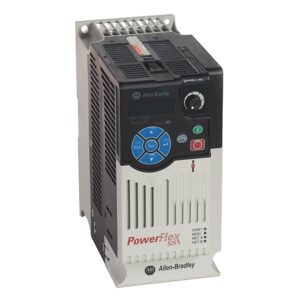
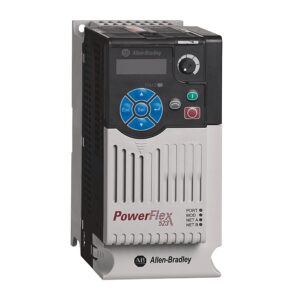
A key advantage of a VFD is delivering 100% of the motor’s rated torque at zero speed. This allows for smooth, powerful starting of high-inertia loads without the massive electrical and mechanical stress of a DOL start. Advanced drives, like the Rockwell PowerFlex 525 series, include programmable torque-control features. You can set precise torque limits to protect delicate machinery, ensuring a conveyor belt doesn’t snap or a mixer doesn’t shear a pin if a jam occurs.
Thermal Protection and Winding Longevity
A VFD provides superior thermal protection compared to a standard overload relay. It continuously calculates the motor’s thermal state based on current and speed, preventing overheating of the windings. This intelligent protection drastically reduces insulation breakdown, a primary cause of motor failure. For operations in harsh Queensland environments with ambient temperatures often exceeding 35°C, this is critical. Preventing even one motor rewind on a 22kW motor can save over A$2,000, making the VFD a cost-effective protective device.
Precision Process Control and Enhanced Safety
Energy savings are just the start. The real operational benefits of using a vfd on a motor come from superior control and integrated safety. A VFD gives you granular command over your process, leading to higher quality products, less waste, and a safer work environment compliant with Australian standards. It transforms a simple motor into a smart, responsive asset.
Dynamic Speed and Precision Adjustments
Forget fixed-speed limitations. VFDs deliver sub-RPM accuracy, allowing for seamless on-the-fly adjustments. On a production line, this means you can execute product changeovers in minutes, not hours. Adjust conveyor speeds to match different product sizes or material types instantly, without mechanical changes. This level of precision directly impacts your bottom line by slashing waste. For example, reducing product defects by just 2% in a food manufacturing line can save over A$20,000 annually in material costs alone.
For complex tasks, VFDs work with PLCs to run automated speed curves, ensuring perfect synchronisation between multiple motors. This is essential for applications like:
- Web Handling: Maintaining precise tension for paper, film, or metal sheeting to prevent tears and breaks.
- Bottling & Canning: Synchronising fillers, cappers, and labellers to eliminate spills and misaligned packaging.
- Material Dosing: Accurately controlling augers and pumps for consistent batch mixing.
Integrated Safety and Connectivity
Modern VFDs are central to machine safety. A key feature is Safe Torque Off (STO), a function typically rated to SIL 2 or PL d under AS 4024.1. STO directly prevents the drive from sending power to the motor, creating a safe state without needing expensive, bulky external safety contactors. This simplifies safety circuit design, saves panel space, and provides a faster, more reliable response in an emergency.
Beyond safety, ‘smart’ drives are packed with diagnostic tools. Connected via networks like EtherNet/IP, they stream real-time operational data. You can monitor motor current, voltage, temperature, and run-time from a central HMI or remote device. This data is critical for predictive maintenance. An upward trend in current draw over several weeks can flag a failing motor bearing, allowing you to schedule a replacement during planned downtime, not after a catastrophic failure. These advanced diagnostic and safety features are significant benefits of using a vfd on a motor, directly reducing unexpected breakdowns.
VFDs also reduce acoustic noise. By increasing the switching frequency, they can shift the motor’s operating noise above the range of human hearing (typically >16 kHz). This lowers ambient noise on the factory floor, helping you meet Safe Work Australia’s exposure standard of 85 dBA and improving worker comfort.
Find the VFD with the right safety and control features for your application today.
Selecting the Right VFD for Your Australian Operation
Choosing the correct Variable Frequency Drive (VFD) is the final step to guarantee you achieve all the benefits of using a vfd on a motor. The right drive maximises energy savings, enhances process control, and extends equipment life. The wrong one leads to downtime and wasted capital. For Australian operations, selection comes down to three things: the drive’s application focus, the core technical specs, and how you source the hardware.
Application Focus: Choosing Your Drive Type
Your choice of VFD type often depends on the control systems and demands already on site. Integrating a drive into an existing PLC ecosystem simplifies programming and maintenance. Here’s a direct look at common VFD applications in Australia:
- Industrial Heavy-Duty Drives: Ideal for robust industrial environments like mining, heavy manufacturing, and processing. These drives are engineered for toughness and reliable operation, often integrating smoothly into existing industrial control systems to simplify programming and maintenance.
- Commercial & Utility Drives: Strong performers in HVAC, pumping, and water/wastewater management. These VFDs prioritize energy efficiency, making them a top choice for building management systems (BMS) and public utilities.
- High-Performance & Precision Drives: Designed for complex machine control, robotics, and applications requiring superior motion control. These drives offer advanced capabilities for demanding precision tasks, often with extensive integration options.
Smart Sourcing for Better ROI
Paying full manufacturer Recommended Retail Price (RRP) isn’t necessary to get genuine, factory-sealed hardware. Through parallel importing, businesses can source authentic VFDs from global markets at a much lower cost. This strategy allows you to SAVE OVER 40% on genuine, high-quality VFDs, directly boosting your project’s return on investment.
The key is to work with a trusted local supplier. You get the massive cost savings of global sourcing combined with the security of Australian support. With stock held right here in our Narangba, QLD warehouse, you get fast shipping Australia-wide, not 12-week lead times from an overseas factory. Get the best of both worlds: genuine parts at incredible prices, backed by local service.
Ready to cut your project costs? Shop our full range of VFDs now.
Before you buy, you must verify three critical specifications to ensure compatibility and safety for your Australian motor application. Mismatching these specs is a common and expensive mistake.
- Voltage: Check if your supply is 240V single-phase or 415V three-phase. The VFD’s input voltage MUST match your site’s power supply.
- Amperage (FLA): The drive’s Full Load Amp (FLA) rating must be equal to or greater than the motor’s FLA, which is found on the motor’s nameplate. An undersized drive will constantly trip on overcurrent faults.
- Enclosure Rating: This dictates where the drive can be installed. An IP20 rating is for clean, dry electrical cabinets only. For dusty workshops, agricultural sheds, or wash-down areas in food processing plants, you need a sealed IP66 rated drive to protect it from dust and high-pressure water jets.
Confirming these details ensures the VFD you purchase will perform reliably, safely, and unlock the full financial and operational benefits of using a vfd on a motor from day one.
Unlock Your ROI: Upgrade to a VFD Today
Leaving your motors on a fixed-speed setup is a direct drain on your 2026 operational budget. The evidence is clear: by implementing a Variable Frequency Drive, you gain immediate control over energy consumption, potentially cutting motor-related electricity costs by up to 50%. This isn’t just about a lower power bill. The benefits of using a vfd on a motor extend to your physical assets. By enabling soft starts and eliminating mechanical shock, you can significantly prolong the lifespan of your pumps, fans, and conveyors. This means fewer breakdowns, reduced maintenance costs, and a much stronger return on your investment.
This focus on electrical efficiency extends beyond just motor control. Many facilities find significant savings by re-evaluating other high-consumption systems, such as space heating. Modern solutions like infrared heating, for instance, offer a more direct and often more economical way to heat workspaces compared to traditional convection systems. To explore this and other energy-saving technologies, you can learn more.
Don’t pay full price for this critical upgrade. InstroDirect delivers the hardware you need to achieve these savings now. SAVE OVER 40% FROM MANUFACTURER RRP on genuine Rockwell, Siemens, and Schneider VFDs. All parts are in stock and ready to ship with free delivery on all orders across Australia. Start driving real efficiency in your operation.
SAVE ON GENUINE VFD HARDWARE AT INSTRODIRECT
Frequently Asked Questions About VFDs
What is the primary benefit of using a VFD on an AC motor?
The primary benefit of using a VFD is significant energy savings, especially on centrifugal fan and pump loads. A VFD matches the motor’s speed to the exact process demand, which drastically cuts electricity consumption. According to the Affinity Laws, a 20% reduction in motor speed can lower energy use by nearly 50%. This direct control also reduces mechanical stress on equipment during startup, extending the life of belts, gears, and bearings.
Can any motor be used with a variable frequency drive?
No, not all motors are suitable for VFD operation. While many standard three-phase induction motors can work, an inverter-duty motor is always the best choice for reliability. Inverter-duty motors feature enhanced insulation (NEMA MG1 Part 31 compliant) to withstand voltage spikes and are designed for better cooling at low speeds. Using a standard motor below 20% of its rated speed without independent cooling can cause it to overheat and fail prematurely.
How much energy can I realistically save by installing a VFD?
You can realistically save between 20% and 60% on motor energy costs. For a 75kW fan running 16 hours a day in a facility in NSW, where electricity can cost A$0.28/kWh, reducing its speed by just 25% could save over A$25,000 per year. The precise savings depend on your application’s load profile and operating hours, but the energy reduction is one of the biggest benefits of using a vfd on a motor, delivering a fast return on investment.
What is the difference between a soft starter and a VFD?
A soft starter only controls the motor’s voltage during startup and shutdown, while a VFD controls both voltage and frequency for continuous speed control. A soft starter is designed simply to reduce the large inrush current and mechanical shock of a direct-on-line start. A VFD provides that same soft-start capability but adds the crucial function of adjusting the motor’s speed throughout the entire operational cycle, enabling process control and energy savings.
Do VFDs cause motor damage due to harmonics or voltage spikes?
Yes, VFDs can cause motor damage if not installed correctly, but these issues are entirely preventable. The high-speed switching inside a VFD can create voltage spikes that degrade motor winding insulation and bearing currents that lead to premature failure. These risks are managed by using inverter-duty motors, keeping motor cable lengths short (under 25 metres), and installing output filters like dv/dt filters or load reactors when necessary. Proper system design eliminates these problems.
How long does it take for a VFD to pay for itself (ROI)?
A VFD typically pays for itself in 6 to 24 months in Australian industrial applications. The return on investment (ROI) is fastest on equipment with long run hours and variable loads, like HVAC fans or irrigation pumps. For a 55kW pump operating 24/7, the annual energy savings alone can often exceed the initial A$8,000 – A$12,000 installed cost within the first year. State-based energy efficiency rebates can shorten this payback period even further.
What is Safe Torque Off (STO) in modern VFDs?
Safe Torque Off (STO) is an integrated safety function that reliably prevents the VFD from delivering power to the motor, stopping it from producing torque. It’s a certified safety feature (e.g., SIL 2 or Pld) that replaces external safety contactors, reducing panel space, wiring, and component costs. When an emergency stop is triggered, STO disables the drive’s output gates directly, providing a faster and more reliable stop than traditional safety circuits.
Is it difficult to program a VFD for a simple pump application?
No, programming a VFD for a simple pump or fan is straightforward. Modern drives from brands like Allen-Bradley, Siemens, or Schneider Electric include setup wizards and application-specific parameter groups. For a basic setup, you just enter the motor’s nameplate data (volts, amps, Hz, RPM) and select the control method, such as using a 4-20mA signal from a pressure sensor. An experienced technician can commission a drive for a simple pump in under 30 minutes.
Related posts
Siemens TIA Portal Programming Basics: A Practical Guide for Engineers
What if you could master Siemens TIA Portal without paying the full “Australia tax” on S7 hardware?
It’s a common problem for Australian engineers….
Emergency Industrial Parts Supplier: Reducing Downtime in 2026
That 12-week lead time from your authorised distributor isn’t just an inconvenience. For a production line losing A$10,000 an hour, it’s a potential…
PLC vs DCS — What Is the Difference?
Programmable Logic Controllers (PLCs) and Distributed Control Systems (DCS) are both used to automate industrial processes, but they evolved from
Siemens TIA Portal Introduction Guide for Australian Engineers
Siemens TIA Portal (Totally Integrated Automation Portal) is the unified engineering software platform for Siemens S7 PLCs, HMIs and drives.
PLC vs DCS — What Is the Difference?
Programmable Logic Controllers (PLCs) and Distributed Control Systems (DCS) are both used to automate industrial processes, but they evolved from
Leave a Comment
Your email address will not be published. Required fields are marked *