
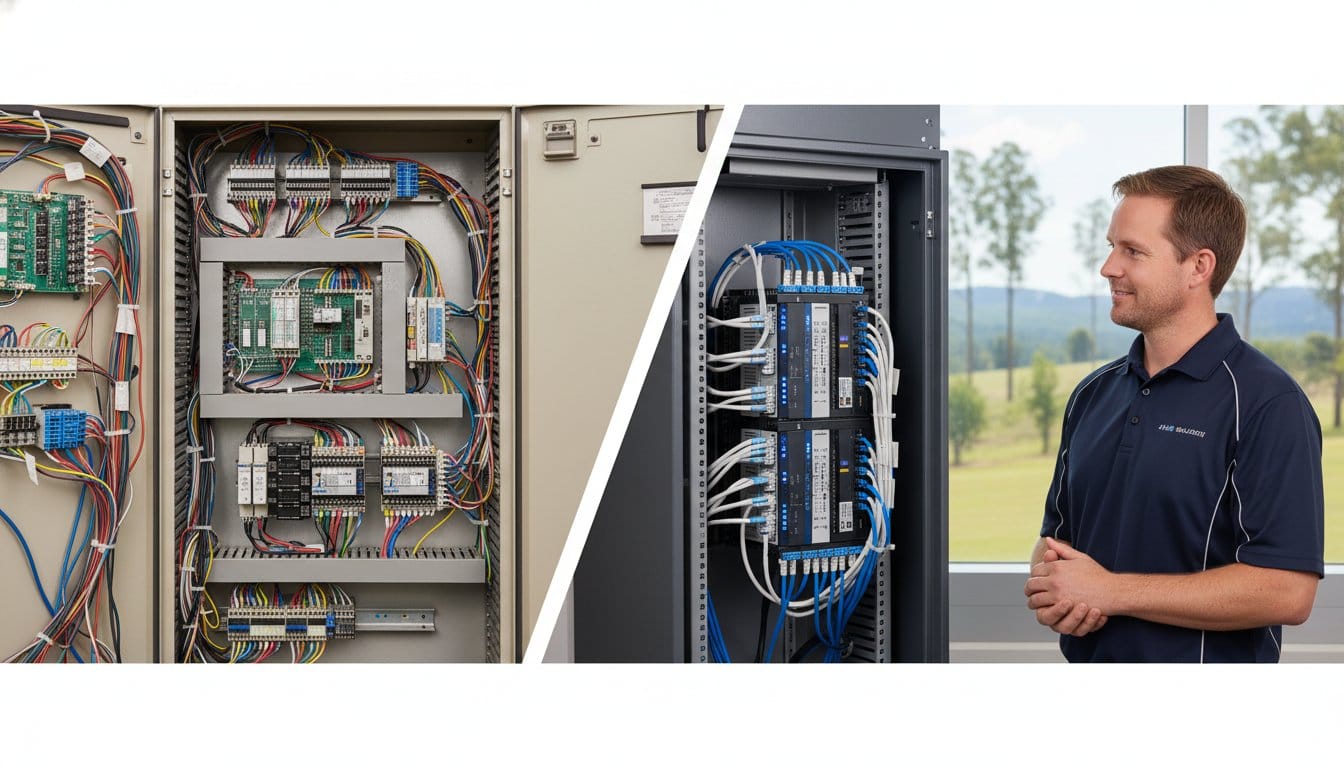
The “gold standard” DCS you’ve relied on for years might actually be the biggest bottleneck in your 2026 maintenance budget. While traditional thinking suggests a Distributed Control System is mandatory for complex process logic, the technical reality of dcs vs PLC has shifted with the release of the AS IEC 61131.10:2026 standard. You’re likely tired of high licensing costs and the headache of integrating multi-vendor environments that don’t talk to each other.
At InstroDirect.com.au, we see engineers moving toward high-performance controllers like the ControlLogix 5580 or Siemens S7-1500 G2 to bridge this gap. We’ll show you how to master these architectural differences to reduce hardware costs by up to 40% compared to manufacturer RRP. Because we aren’t locked into one brand, we provide the technical depth you need to choose between Rockwell, Siemens, or Schneider Electric based on performance, not a distributor’s quota. This article previews the latest Studio 5000 Logix Designer V35 features and explains why parallel importing is the smartest way to secure genuine hardware with local Australian support.
Key Takeaways
- Understand the architectural shift from centralized DCS databases to tag-based PLC systems to streamline your data integration.
- Evaluate dcs vs PLC performance by comparing <10ms discrete logic scan times against steady-state process control requirements.
- Identify hidden OPEX costs in DCS licensing and learn how modern controllers like ControlLogix 5580 bridge the functional gap.
- Discover how to source genuine Rockwell, Siemens, and Schneider Electric hardware at 20-40% below standard Australian distributor RRP.
- Learn why InstroDirect.com.au is the preferred sales arm for engineers seeking unbiased hardware recommendations across multiple brands.
DCS vs PLC: Defining the Modern Control Landscape
Choosing the right architecture requires a deep understanding of how control logic interacts with your process data. The technical distinction in the dcs vs PLC debate has shifted from simple I/O counts to how the system handles database integration. At InstroDirect.com.au, we provide engineers with the hardware required for both environments, whether you’re building a high-speed discrete line or a complex chemical process. Because we aren’t locked into one brand, we can supply Allen-Bradley ControlLogix modules alongside Siemens S7-1500 components. This ensures your choice is driven by technical specs rather than distributor bias. We act as your sales arm, providing genuine parts at 20-40% below manufacturer RRP.
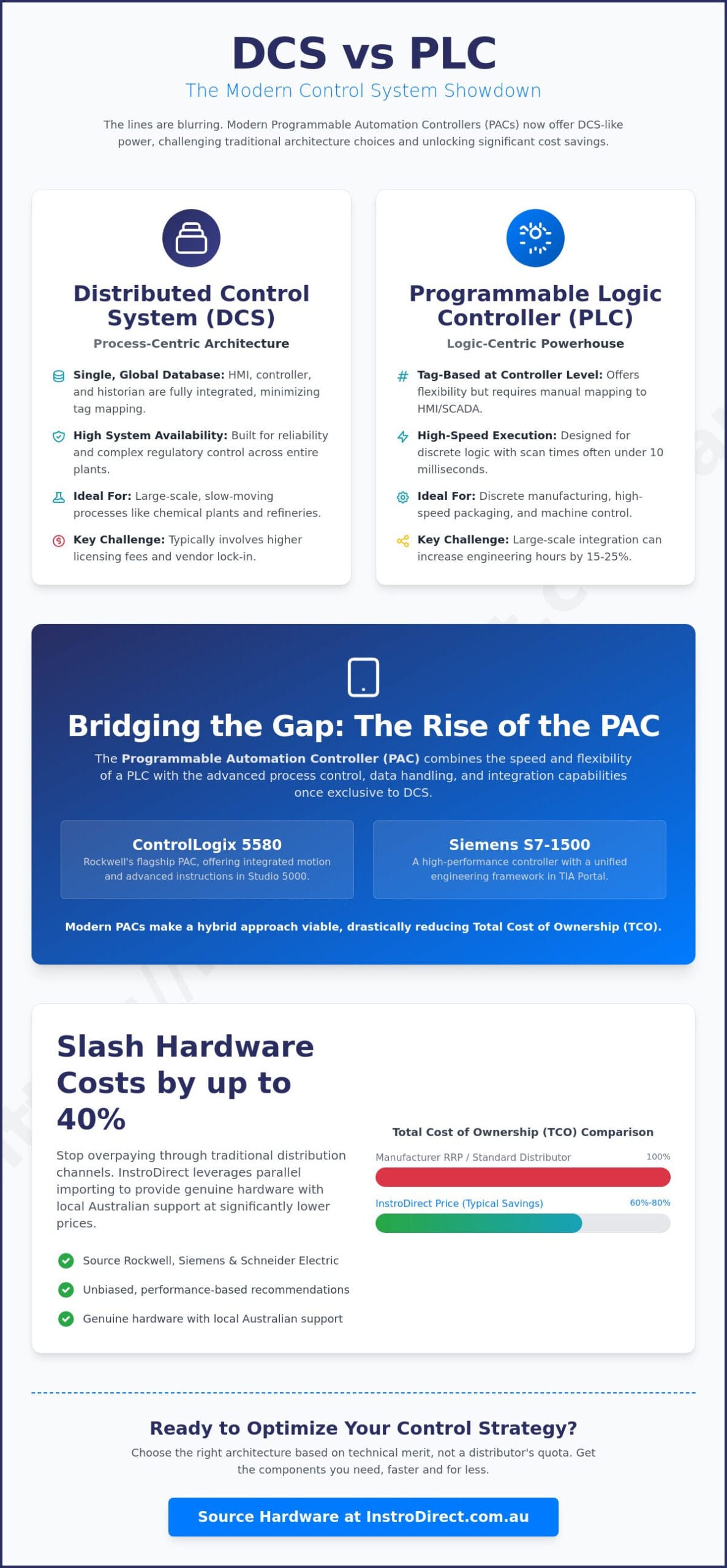
A Distributed Control System (DCS) is an integrated, process-centric architecture where the HMI, controller, and historian share a single, global database. This design minimizes the engineering hours spent on tag mapping and cross-controller communication. In contrast, a Programmable Logic Controller (PLC) is a high-speed, logic-centric device designed for discrete control. While a PLC focuses on executing code at the fastest possible scan rate, the DCS prioritizes system-wide availability and complex regulatory control. The core difference remains the execution: hardware-driven logic (PLC) versus software-integrated process management (DCS).
The Core Philosophy: Process-Centric vs. Logic-Centric
DCS platforms focus on the “process” by treating the entire plant as a single entity with an integrated HMI and alarming structure. PLCs focus on “tasks,” handling discrete I/O execution with scan rates often below 10ms. This speed is critical for high-speed bottling lines but less vital for slow-moving refinery processes. A DCS handles thousands of PID loops through a single, unified database, whereas a PLC rack often requires manual tag mapping across multiple controllers to achieve similar scale. This database cohesion is why DCS systems typically carry higher licensing fees, which you can offset by sourcing hardware through InstroDirect.
Historical Evolution and the Rise of the PAC
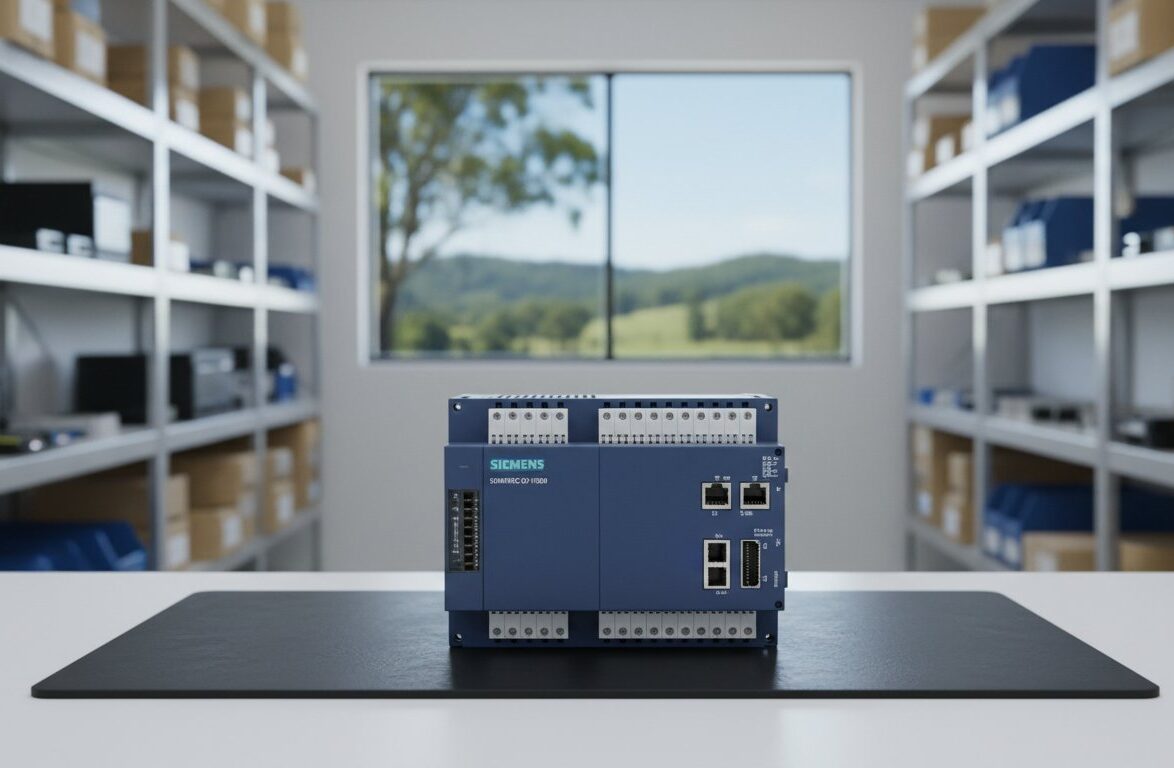
The introduction of the Allen-Bradley ControlLogix series redefined what engineers expect from a controller. These Programmable Automation Controllers (PACs) bridge the gap by offering DCS-like features, such as integrated motion control and advanced process instructions, within a PLC form factor. Modern PACs like the ControlLogix 5580 running Studio 5000 V35 have moved far beyond simple relay replacement. They now handle complex process control that once required a full DCS. Engineers often use the term “PLC” today to describe these PACs, but the technical capabilities now allow for a hybrid approach that reduces the Total Cost of Ownership (TCO) for many Australian industrial sites. If you can’t find the specific processor or I/O module you need for your PAC upgrade, contact us directly at InstroDirect.com.au; we specialize in sourcing hard-to-find components.
Architectural Differences and Technical Specifications
The technical reality of dcs vs PLC selection often comes down to how your system manages data. A Distributed Control System utilizes a centralized database. Every tag you create in the controller is immediately visible to the HMI, historian, and alarm management system. This “Single Point of Configuration” is the hallmark of DCS architecture. Conversely, PLC systems are traditionally tag-based at the controller level. This requires manual mapping between the logic and the HMI layer. While this adds engineering steps, it offers greater flexibility for standalone machines.
Database Management and HMI Integration
DCS platforms excel in large-scale environments because they eliminate the need for multi-software synchronization. In a PLC environment, you might use Studio 5000 for logic and FactoryTalk View for HMI. This can increase engineering hours during commissioning by 15% to 25% on massive projects. Siemens TIA Portal attempts to bridge this gap by providing a unified engineering framework for its S7-1500 range. At InstroDirect.com.au, we stock these Siemens components alongside Rockwell hardware. We aren’t locked into one brand, so we provide the parts you need for whichever integration path you choose. You can browse our full range of automation hardware to see the latest stock.
Scan times are another critical spec. PLCs are built for speed, frequently executing discrete logic in under 10ms. This is mandatory for high-speed packaging or safety shutdowns. A DCS is optimized for steady-state process control. It prioritizes the integrity of thousands of PID loops over raw scan speed. When choosing the right control system, consider if your process is fast-acting or requires the complex regulatory management typical of oil and gas or chemical plants.
System Reliability and Redundancy
Redundancy models differ significantly between these two worlds. A DCS typically features native redundancy for controllers, power supplies, and communication networks as a standard package. PLC systems achieve high availability through modular additions. For instance, using Rockwell Automation hardware like the 1756-RM2 module allows for bumpless switchover in ControlLogix racks. This modularity lets you pay only for the level of protection your specific application requires.
Failure modes also vary. If a central DCS server fails, the integrated nature can sometimes lead to a total loss of operator visibility across the plant. A PLC-based SCADA system often uses decentralized controllers. These units continue to run their local logic independently even if the central server loses connection. This “cell-based” scalability makes PLCs a pragmatic choice for phased expansions. Sourcing these modules through InstroDirect as your sales arm allows you to bypass the 40% distributor markups common in the Australian market.
Evaluating Total Cost of Ownership (TCO) for Australian Plants
Total Cost of Ownership is the most critical metric when deciding on dcs vs PLC for your facility. While a Distributed Control System offers integrated engineering, the initial CAPEX is significantly higher due to proprietary hardware and mandatory software licensing. A high-end PLC system, such as a Rockwell ControlLogix or Siemens S7-1500, generally offers a lower entry price for hardware. For many Australian plants, the modular nature of PLCs allows for a “pay as you grow” approach, whereas a DCS often requires a massive upfront investment in server infrastructure and global database licenses.
OPEX and recurring licensing fees represent the hidden drain on automation budgets. As of March 2026, basic Rockwell software subscriptions cost approximately $1,000 AUD per year. DCS annual support contracts are typically much higher, often calculated as a percentage of the total system value. Engineering costs also differ; a DCS saves time during initial configuration through its unified database, but PLCs offer greater flexibility. You can balance higher PLC integration time against the lower hardware costs by sourcing genuine parts through InstroDirect.com.au. We act as your sales arm, providing the technical hardware you need without the 40% distributor markups.
Hardware Costs and Brand Independence
Being locked into one brand is a major financial risk in the DCS world. If a proprietary controller fails, you’re forced to pay whatever the authorized distributor demands. InstroDirect.com.au provides a resourceful alternative. We aren’t locked into one brand, meaning we offer unbiased access to Siemens, Rockwell, and Schneider Electric components. Sourcing these parts via parallel import allows Australian engineers to save over 40% from manufacturer RRP. This brand independence ensures you choose the best technical solution for your process, not just the one your DCS vendor supports. Modular PLC spare parts also reduce your on-site inventory overhead, as many I/O modules are interchangeable across different sections of the plant.
Lifecycle and Obsolescence Management
DCS systems traditionally offer longer lifecycles, sometimes spanning 20 years, but they are notoriously difficult to upgrade without significant downtime. PLCs iterate faster, allowing for incremental “hot-swappable” upgrades. Modern controllers like the ControlLogix 5580 allow you to replace processors or I/O modules while the system is live, which is vital for 24/7 Australian mining and processing operations. Finding legacy parts for older DCS systems in the local market is increasingly difficult. We specialize in sourcing these hard-to-find genuine components to extend the life of your existing assets. If you can’t find a specific module on our site, contact us directly and our technical team will locate it for you.
Application Mapping: Which System for Which Industry?
Selecting between dcs vs PLC depends heavily on your industry’s specific control requirements. In Oil & Gas and Chemical processing, the DCS remains the standard. These environments require complex PID loops and high-availability regulatory control that a unified database handles most efficiently. However, in the Australian mining and mineral processing sector, we see a massive shift toward the hybrid approach. Engineers are combining high-end PLCs with robust SCADA layers to achieve DCS-like visibility at a fraction of the hardware cost. This trend is driven by the need for site-wide flexibility and the ability to source parts from multiple vendors.
Food & Beverage facilities prioritize raw speed and modularity. High-speed packaging lines require scan times under 10ms to maintain synchronization. PLCs are the clear winner here. For Water and Wastewater applications, the distributed nature of the assets makes PLCs or RTUs the only logical choice. These systems leverage remote telemetry to manage assets spread across hundreds of kilometers; a task a centralized DCS architecture isn’t built to handle. At InstroDirect.com.au, we support these diverse needs by stocking everything from Micro 800 controllers to large-scale Siemens components. We act as your sales arm, providing the hardware required for any industrial environment.
Discrete vs. Continuous Process Control
The “break-even” point for moving from a PLC to a DCS is typically around 1,000 I/O points or when your process exceeds 50 complex PID loops. Below this threshold, the engineering overhead of a DCS often outweighs the benefits. For complex motor control in these environments, engineers frequently use PowerFlex Drives integrated directly into a Logix-based PLC rack. This setup provides high-speed discrete control while the SCADA system provides the process-level visualization. Because we aren’t locked into one brand, we can help you spec the right drive for your specific torque and speed requirements without the usual manufacturer bias.
Safety Instrumented Systems (SIS)
Functional safety is non-negotiable under Australian standards like AS 61508. DCS platforms often feature integrated safety where the process and safety logic reside in the same environment. While convenient, this integrated approach can be 30% more expensive than using dedicated safety PLCs like Allen-Bradley GuardLogix. Separate safety architectures allow you to upgrade your process control without disturbing the certified safety logic. This reduces the cost of re-validation during system lifecycle changes. If you’re looking to reduce your CAPEX on your next safety upgrade, shop our range of genuine safety components and save on standard distributor rates.
Sourcing Control Hardware: The InstroDirect Advantage
The technical debate of dcs vs PLC is only half the battle. Once you’ve identified the right architecture for your plant, the next challenge is procurement. InstroDirect.com.au serves as the primary sales arm for Australian engineers who value efficiency over traditional distribution markups. We understand that a ControlLogix 5580 or a Siemens S7-1500 G2 is a critical asset. Our business model ensures you get these parts without the standard 40% markup found at authorized dealers. We aren’t locked into one brand. This allows us to provide unbiased technical recommendations based on your specific I/O requirements and scan time needs.
Parallel Importing – Lower Pricing for Genuine Parts
We source our hardware through direct parallel importing. This strategy allows us to bypass the local distribution layers that inflate prices for the Australian market. Every component we sell, from Allen-Bradley PowerFlex drives to Schneider Electric Altivar units, is guaranteed genuine and new-in-box. As of May 2026, our pricing remains 20-40% below manufacturer RRP. This is a massive advantage for CAPEX projects where hardware costs can consume the majority of the budget. If you’re managing a large-scale migration or a new facility build, Contact Us for bulk project quotes. We provide fast shipping from our Queensland warehouse to minimize your downtime.
Expert Support for Technical Sourcing
Our technical knowledge goes beyond surface-level sales. We employ a team with field experience who understand the difference between a 1756-L83E and an L85E. We assist engineers in finding hard-to-locate or obsolete modules that authorized channels have discontinued. This is vital for maintaining legacy DCS or PLC environments that still have years of service life remaining. We offer direct phone support during Australian business hours. IF YOU CANT FIND WHAT YOUR LOOKING FOR CONTACT US DIRECTLY. We specialize in sourcing the exact product codes your system requires to maintain high availability.
Choosing InstroDirect.com.au means you aren’t forced into a single ecosystem. Whether you’re building a hybrid system that bridges the dcs vs PLC gap or simply need a single replacement Micro 800 controller, we have the stock. You save more because we operate with a no-nonsense, pragmatic approach. Browse our online shop to see current availability and live pricing for the industry’s leading automation brands.
Optimize Your Control Architecture for 2026
The technical boundary in the dcs vs PLC debate continues to blur as modern PACs adopt integrated database features once exclusive to high-end Distributed Control Systems. You’ve seen how database cohesion, scan rates, and redundancy models impact your plant’s Total Cost of Ownership. Whether your facility requires the complex PID management of a DCS or the high-speed discrete logic of a Rockwell ControlLogix 5580, the right hardware choice depends on your specific process goals, not a manufacturer’s sales quota. InstroDirect.com.au acts as your independent sales arm, ensuring you aren’t locked into one brand when sourcing critical automation components.
By leveraging parallel importing, you secure genuine, new-in-box hardware with expert Australian support while bypassing traditional distributor markups. This approach allows you to reduce hardware CAPEX by 20% to 40% based on March 2026 market rates. Don’t let proprietary licensing or high RRP stall your next system migration. Take control of your procurement process today. We have the technical depth to help you find the exact module your system requires.
SAVE OVER 40% ON AUTOMATION HARDWARE – SHOP NOW
Frequently Asked Questions
Is a DCS more reliable than a PLC?
Reliability depends on the redundancy model rather than the architecture type. A DCS typically features native redundancy for controllers and networks as a standard package. High-end PLC systems achieve 99.999% uptime by using modular high-availability hardware like the 1756-RM2 redundancy module. InstroDirect.com.au stocks these critical Rockwell Automation components to ensure your system remains operational. We provide genuine parts that meet the same technical standards as those from authorized distributors.
Can a PLC perform the same functions as a DCS?
Modern Programmable Automation Controllers (PACs) now execute complex PID loops and advanced process instructions that were once exclusive to a DCS. The technical distinction in the dcs vs PLC debate has shifted toward database management. While a DCS uses a global database for integrated HMI and control, a PLC requires manual tag mapping. High-performance units like the ControlLogix 5580 bridge this gap effectively for most Australian industrial applications.
What is the typical I/O limit for a modern PLC system?
A modern flagship controller like the Allen-Bradley ControlLogix 5580 supports up to 128,000 discrete I/O points and 4,000 analog I/O points. Most Australian manufacturing plants rarely exceed 5,000 I/O points, making the PLC a highly scalable and cost-effective choice. If you require high-density I/O modules for a large-scale project, contact us directly at InstroDirect.com.au for bulk pricing on genuine Siemens or Rockwell hardware.
How does parallel importing affect the warranty of Rockwell or Siemens parts?
InstroDirect.com.au provides a direct replacement warranty on all genuine parallel imported parts. While manufacturer warranties may be restricted to authorized channels, we act as your sales arm to ensure you are covered. We only sell new-in-box hardware and provide in-house technical support from experienced field engineers. This model allows Australian businesses to save 20% to 40% on hardware costs without sacrificing technical reliability or support.
Which system is easier to maintain for a small Australian manufacturing plant?
PLC systems are significantly easier to maintain due to the wide availability of skilled technicians in Australia. Most local engineers are proficient in Studio 5000 or Siemens TIA Portal. DCS systems often require proprietary training and expensive service contracts with the original vendor. Sourcing replacement parts like Micro 800 controllers or PowerFlex drives through InstroDirect.com.au ensures fast delivery and lower inventory costs for smaller facilities.
Does a DCS require a constant server connection to function?
Yes, a DCS requires a constant connection to its central server to maintain the integrity of its integrated global database and HMI visibility. If the central server fails, operators may lose total plant visibility. In contrast, PLC-based systems use decentralized logic. Local controllers continue to run their specific tasks even if the SCADA server loses connection. This “cell-based” architecture provides superior fault tolerance for distributed Australian mining operations.
How do I calculate the ROI on a VSD vs a soft starter for my control system?
You can calculate the exact energy savings using the VSD ROI calculator at InstroDirect.com.au. Variable Speed Drives like the PowerFlex 525 can reduce energy consumption by up to 50% on centrifugal pump and fan loads compared to a fixed-speed soft starter. The ROI is typically achieved within 12 to 18 months through reduced power bills and decreased mechanical wear on your motor assets.
Why is DCS licensing so much more expensive than PLC software?
DCS licensing is more expensive because it covers a fully integrated environment including the controller logic, HMI, historian, and alarm management. You pay for the convenience of a single point of configuration. PLC software like Studio 5000 is modular; you only pay for the specific editors you need. As of March 2026, basic PLC subscriptions start at approximately $1,000 AUD per year, offering a much lower entry point for technical automation.
Leave a Comment
Your email address will not be published. Required fields are marked *