Product details
Compact Optical DO Sensor — Field-Replaceable Fluorescence Cap
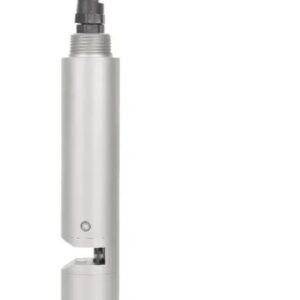
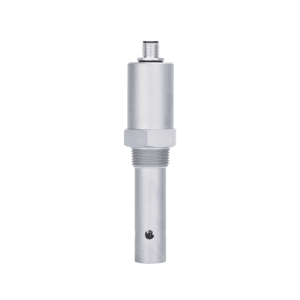
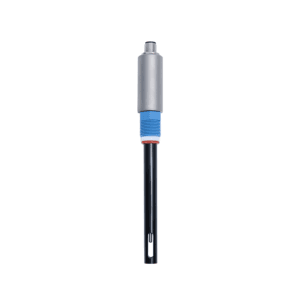
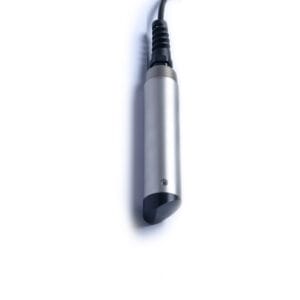
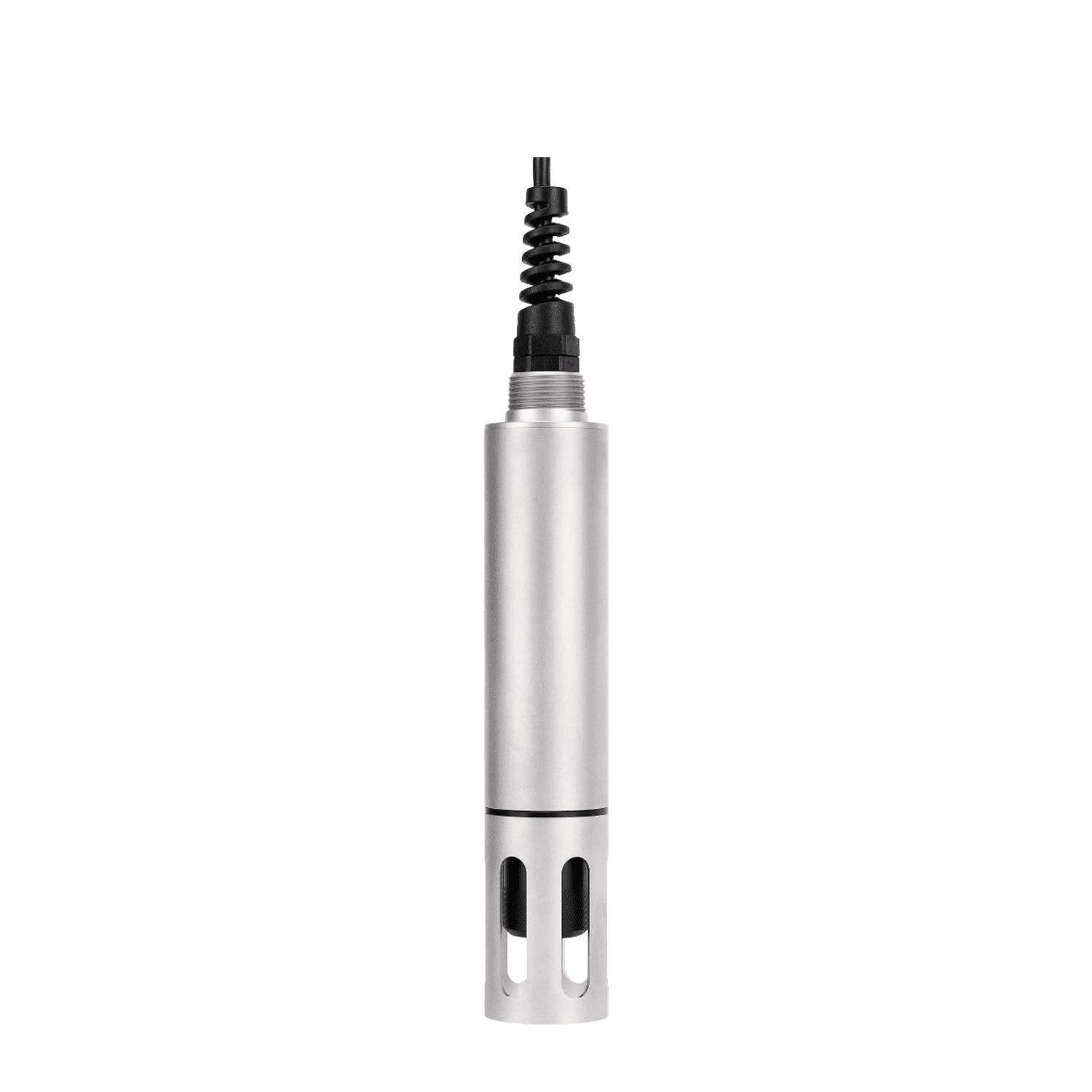
The InstroDirect IDO-F28c Compact Fluorescence Dissolved Oxygen Sensor delivers the full performance of a fluorescence-quenching optical DO measurement in a 144 mm × Ø28 mm body — small enough for 25NB threaded ports, telemetry nodes, and handheld deployments, but robust enough for permanent installation in dosing loops and aeration tanks.
The defining feature is the field-replaceable fluorescence cap. When the optical membrane eventually degrades — typically every 12–24 months depending on biofouling load — you swap the cap on-site in under a minute. No factory return. No week-long probe turnaround. Keep one spare cap per deployment and a service call becomes a consumable swap.
Technical Specifications
| Parameter | Specification |
|---|---|
| Measurement parameters | Dissolved oxygen, temperature |
| Measurement method | Fluorescence quenching method — removable / replaceable membrane cap |
| Range | DO: 0 – 20 mg/L or 0 – 200 %; Temperature: 0 – 60 °C |
| Accuracy | ± 0.3 mg/L |
| Repeatability | ± 0.3 mg/L |
| Resolution | 0.01 mg/L |
| Response time | ≤ 60 s |
| Drift | ± 0.3 mg/L |
| Temperature compensation accuracy | ± 0.3 mg/L |
| Temperature range | 0 – 60 °C |
| Protection level | IP68 |
| Communication | RS485 Modbus RTU, max baud 115200 bps |
| Power supply / Consumption | 12 / 24 VDC, < 0.5 W |
| Material | Titanium alloy, stainless steel, POM |
| Size | 144 mm × Φ 28 mm |
Australian Applications
- Aquaculture — tank DO telemetry, fish farm water quality, RAS biofilter sumps, prawn pond monitoring
- Small WWTPs & package plants — aeration control in MBR bioreactors, council package plants, recycled water systems
- Food & beverage — fermentation vessels (craft beer, kombucha, yeast propagation), dairy CIP water
- Environmental stations — stream gauge boxes, solar-powered remote monitoring, profiling sondes
- Research & labs — university respirometry, field campaigns, algae growth studies
- OEM integration — buildable into datalogger products and IoT water-quality boxes
Why the Replaceable Cap Matters
Traditional galvanic and polarographic DO probes need full membrane-and-electrolyte service every 3–6 months — messy, time-consuming, and easy to contaminate. Integrated-cap optical sensors force you to send the whole probe back when the cap eventually fails.
The IDO-F28c splits the difference. Caps have a 12-month shelf life. Keep one spare per deployment. Service = 60-second swap. Downtime is measured in minutes, not weeks.
Built-In Compensation
Salinity, atmospheric pressure, and temperature compensation run inside the sensor. Your PLC, datalogger, or RTU receives a fully corrected DO value on the Modbus register — no compensation math in ladder logic, no lookup tables in Python.
Wiring
Standard 4-core RS485 Modbus wiring — brown +V, black 0V, yellow A, blue B, shield to panel earth. Modbus register map PDF supplied with every order.
Australian Support, Calibration & Consumables
- Phone and email technical support from Brisbane-based field engineers
- On-site two-point calibration across QLD, NSW, VIC with certificate of calibration
- Zero-DO and air-saturation calibration references for two-point field calibration
- OEM & volume trade pricing from 5 units
Frequently Asked Questions
How often does the fluorescence cap need replacing?
Typical service life is 12–24 months. Clean surface water and distilled process water sit at the longer end; dirty wastewater and high-biofilm aquaculture sit at the shorter end. Spare caps
What thread is the mounting?
Ships standard without a thread. Optional 3/4″ NPT, G3/4, or 25NB BSP adapters available on request — specify when ordering.
What cable length is supplied?
Standard 5 m shielded 4-core RS485 cable. 10 m, 20 m, and 50 m options available. Cable length is ordered fixed — field splicing RS485 shielded cable will degrade signal integrity above 38400 bps and is not recommended.
Does this sensor communicate with NB-IoT or LoRa dataloggers?
Yes — any logger with an RS485 Modbus master input reads this sensor. InstroDirect stocks compatible LoRa and NB-IoT gateway kits. Contact technical support for a bundled solution.
Can I calibrate this sensor myself?
Yes — two-point calibration with zero-DO and air-saturation reference solutions (both stocked). Detailed calibration procedure ships with the sensor. For compliance-grade calibration certificates, book InstroDirect’s on-site service across QLD, NSW, and VIC.
Request a Quote
Trade customers — integrators, aquaculture operators, datalogger OEMs, council water teams — submit a quote request for volume pricing and stock confirmation.
Why InstroDirect vs Endress+Hauser or HACH in Australia
InstroDirect supplies the same grade of water-quality sensor that Australian councils, WWTP integrators, pharma plants, and food & beverage operators specify from Endress+Hauser and HACH — at a significantly lower landed cost and without vendor lock-in.
| Factor | InstroDirect | Endress+Hauser / HACH |
|---|---|---|
| Digital protocol | Open RS485 Modbus RTU — integrates with Allen-Bradley, Siemens, Schneider, Beckhoff, or any SCADA | Proprietary (E+H Memosens / HACH SC digital) — locked to the vendor’s transmitter |
| Technical support | Australian field engineers with 20+ years automation experience | Remote support via offshore ticket queues |
| On-site calibration | InstroDirect technicians available across QLD, NSW, VIC with formal calibration certificate | Third-party authorised service network, longer turnaround |
| Price | Parallel-import model — no distributor margin stack, typically 30–50% below equivalent brand pricing | Premium brand pricing with tiered distributor markup |
| Replacement parts | Standard consumables ordered on demand from InstroDirect | Proprietary cartridges and cells, tied to the brand |
Moving away from Memosens or SC digital protocols frees you to mix and match sensors with any Modbus-capable transmitter or PLC. InstroDirect probes drop straight into an existing control system without a new proprietary transmitter.