Product details
4-Electrode Conductivity Sensor — POM Body for Wastewater
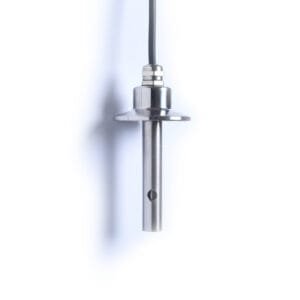
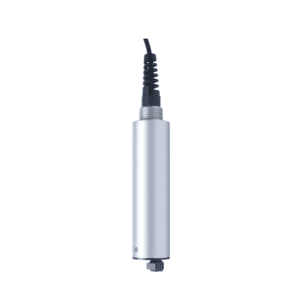
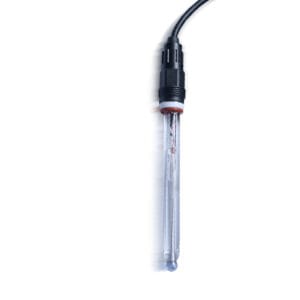
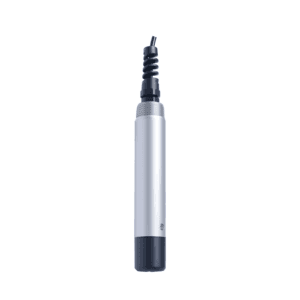
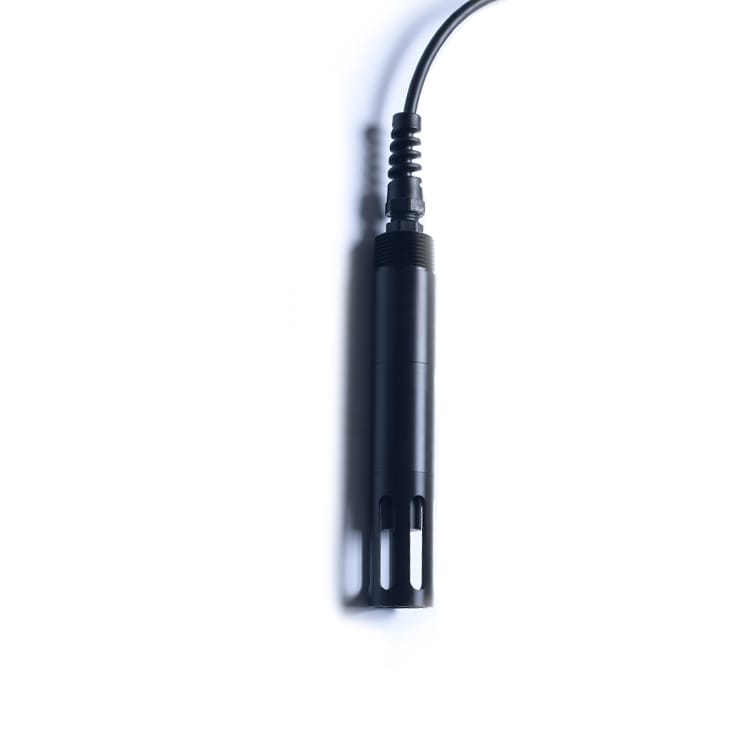
The InstroDirect IDC-4E-POM POM-Body 4-Electrode Conductivity Sensor is a four-electrode conductivity probe in a POM (polyoxymethylene) plastic body, engineered for wastewater, aquaculture salinity, and industrial rinse water where biofouling and high conductivity would defeat a traditional 2-electrode design. The four-electrode arrangement eliminates polarisation errors and tolerates light fouling without drift.
Typical Australian Applications
- WWTP influent and effluent EC / TDS
- Aquaculture salinity monitoring
- Industrial rinse water and wash-down
- Leachate monitoring at waste transfer stations
- Landfill gas condensate
Why Integrators Choose the IDC-4E-POM
- 4-electrode design is immune to polarisation at high EC and to mild electrode coating
- POM plastic body resists corrosion from chlorides and sulphides in wastewater
- Wide 0–2000 mS/cm range covers brine, seawater, and industrial effluent
- Slotted cage protects electrodes from debris while maintaining flow
- Lighter than stainless — ideal for suspended or float-mounted deployments
Installation & Calibration Notes
Can be suspended on its cable or threaded into a 3/4″ NPT boss with the optional adapter. Keep away from metal structures (earth loops degrade reading). Calibrate monthly with 12.88 mS/cm KCl standard.
Frequently Asked Questions
Why 4-electrode instead of 2-electrode for wastewater?
High-conductivity media (>20 mS/cm) cause polarisation in 2-electrode probes, which produces drift. 4-electrode probes inject current on one pair and measure voltage on another, eliminating polarisation and tolerating mild fouling.
Is POM plastic chemically resistant?
POM handles chlorides, dilute acids and bases, and most wastewater chemistries. For strong acids or solvents, see the PEEK-body alternative (IDC-M12-PEEK).
Can it measure seawater?
Yes. Seawater is approximately 50 mS/cm which is well within the 0–2000 mS/cm range. For salinity calculations we provide a conversion factor on request.
Australian Technical Support, Calibration & Consumables
- Phone and email technical support from Brisbane-based field engineers with 20+ years automation experience
- On-site two-point conductivity calibration across QLD, NSW, VIC with certificate of calibration
- Next-day delivery across Australia for ; trade pricing from 5 units
InstroDirect also stocks the full water-analysis reagent range for pH, dissolved oxygen, chlorine, ammonia, and nitrate monitoring.
Request a Trade Quote
Panel builders, system integrators, council water departments, food & beverage engineers, and pharma/process teams get volume trade pricing. Submit a quote request and we’ll respond within one business day with stock, pricing, and lead time.
Why InstroDirect vs Endress+Hauser or HACH in Australia
InstroDirect supplies the same grade of water-quality sensor that Australian councils, WWTP integrators, pharma plants, and food & beverage operators specify from Endress+Hauser and HACH — at a significantly lower landed cost and without vendor lock-in.
| Factor | InstroDirect | Endress+Hauser / HACH |
|---|---|---|
| Digital protocol | Open RS485 Modbus RTU — integrates with Allen-Bradley, Siemens, Schneider, Beckhoff, or any SCADA | Proprietary (E+H Memosens / HACH SC digital) — locked to the vendor’s transmitter |
| Technical support | Australian field engineers with 20+ years automation experience | Remote support via offshore ticket queues |
| On-site calibration | InstroDirect technicians available across QLD, NSW, VIC with formal calibration certificate | Third-party authorised service network, longer turnaround |
| Price | Parallel-import model — no distributor margin stack, typically 30–50% below equivalent brand pricing | Premium brand pricing with tiered distributor markup |
| Replacement parts | Standard consumables ordered on demand from InstroDirect | Proprietary cartridges and cells, tied to the brand |
Moving away from Memosens or SC digital protocols frees you to mix and match sensors with any Modbus-capable transmitter or PLC. InstroDirect probes drop straight into an existing control system without a new proprietary transmitter.